What's New in Snowflake AI — Cortex & Intelligence
22 Aug 2025

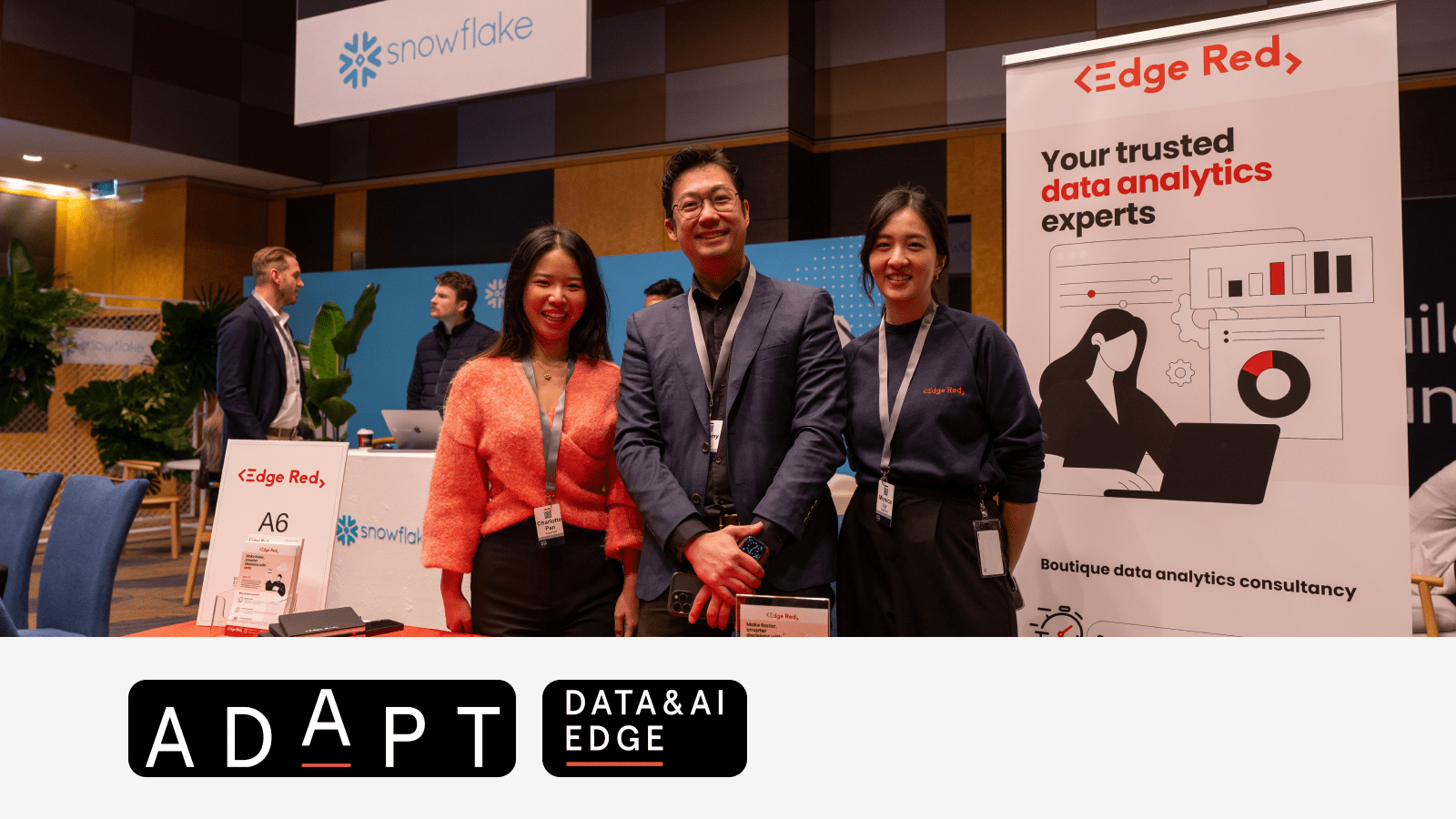
Snowflake dropped a lot at World Tour Sydney in August. Here’s what actually matters — and what we think it means for data teams building on the platform.
What’s new in Snowflake AI
Cortex AISQL — AI functions native to SQL
The most significant announcement was Cortex AISQL. Snowflake has introduced a set of native SQL functions — AI_COMPLETE, AI_FILTER, AI_CLASSIFY, AI_SUMMARIZE_AGG — that let you run AI tasks directly inside a SQL query. No separate pipeline, no external model serving, no additional infrastructure.
What makes this genuinely useful is the FILE datatype support. These functions work on images, documents, and audio — not just text. That means use cases like contract summarisation, product image tagging, and natural language filtering of user feedback can now be handled in a single query inside Snowflake.
Snowflake’s performance claims are notable: up to 70% faster and 60% cheaper than traditional AI workflows. We haven’t stress-tested those numbers ourselves yet, but the architectural simplification alone is real — fewer moving parts, faster development, lower cost to maintain.
Snowflake Intelligence — natural language querying at the warehouse layer
Snowflake Intelligence lets business users ask plain-language questions — “What were our top-selling products last month?” — and get answers directly from live Snowflake data. It writes and runs the queries itself, using semantic models that encode your business metrics and dimensions.
The governance angle is what makes this production-viable rather than just a demo. It enforces role-based access and data masking rules, and runs on top of your existing Snowflake environment — no data movement, no new security approvals. It’s powered by LLMs from OpenAI and Anthropic, routed through Snowflake’s new Semantic Views.
For data teams that have spent years trying to reduce ad hoc request volume, this is the closest thing to a structural fix we’ve seen.
What we think it means
The semantic layer is now the most important investment you can make
Both Cortex AISQL and Snowflake Intelligence are only as good as the data underneath them. Semantic models — the layer that defines your business metrics, dimensions, and relationships — are what make natural language querying trustworthy rather than just impressive in a demo. Teams that have invested in a clean semantic layer are positioned to deploy these tools quickly. Teams that haven’t will hit the same wall they always hit: the AI gives an answer, nobody trusts it.
Don’t fit the problem to the solution
Shirlyn, our Senior Consultant, put it well at the event:
“While these new tools are exciting and do open doors to new possibilities, we should now, more than ever, laser focus on the problem we are trying to solve and NOT try to fit the problem to the solution.”
It’s the right frame. Cortex AISQL is genuinely powerful for unstructured data use cases — but only if you have an actual unstructured data problem to solve. The risk right now is teams adopting new Snowflake AI capabilities because they’re available, not because they’ve identified a specific outcome they’re trying to drive.
Watch the vlog
For a full recap of the day from our Data Analyst Eldon, watch the vlog below.From the floor — team reflections
“The new features in Cortex are particularly valuable for companies to experiment with. You now have the ability to run Cortex analytics through semantic models in Snowflake. I’m especially interested in using it to provide insights on structured data more efficiently.” — Shirlyn, Senior Data Consultant
“The event highlights so many advancements in AI technology, making it easier than ever to work with diverse types of source data, whether PDFs, images, or videos. The case studies from other organisations sparked new ideas for future applications.” — Lyon, Senior Data Analyst
Building on Snowflake Cortex AI?
We implement Snowflake Cortex AI for data teams across Australia — semantic models, Cortex Analyst deployment, and agentic analytics architectures. If you’re evaluating what these new capabilities mean for your platform, we’re happy to have that conversation. This blog was written by Johnathan, Moon, Shirlyn and Lyon from the EdgeRed team.