How to measure whether your workforce is AI ready
18 Nov 2026
Most organisations have deployed AI tools and run some training. Many still cannot say whether their workforce is ready to use AI effectively, responsibly and consistently in daily work. AI readiness is a question about people, and it deserves the same measurement the technology gets.
Aon’s 2026 Human Capital Trends Study describes the gap: workforce transformation is lagging AI technology adoption.
Three lenses on AI readiness
Heike Henscher, who leads the talent assessment practice at Aon, breaks readiness into three lenses, which gives organisations something specific to measure and move.
- AI literacy: the knowledge component. Do people understand how AI works, where it adds value and where its limits are? This separates trusting AI too much from trusting it too little.
- AI fluency: applying that knowledge in a work context to improve decisions, productivity and problem solving.
- Behavioural readiness: the willingness to experiment, learn and adapt, which matters because AI keeps changing and people need to keep learning with it.
Each lens calls for a different response. A literacy gap calls for education, a fluency gap for practice on real work, and a behavioural gap for culture and leadership.
Benchmark before you train
Organisations that build AI capability target training to where people are. That starts with benchmarking current readiness across the three lenses, which shows where the gaps sit and where enablement should go first. It is also ongoing, because the technology keeps moving. Blanket training spends the same effort on people who need little and people who need a lot, and most organisations cannot yet say which is which.
Build readiness into hiring
Capability building does not stop at current employees. Hiring decisions can consider whether a candidate is AI literate, fluent and open to new ways of working. How that is assessed matters: it has to be consistent and reliable, the same for candidates in the same role.
Decide what the time is for
If AI gives people time back, what should they do with it? Automating tasks is the starting point. The longer-term return comes from redesigning roles and building new skills, so people spend more time on higher-value work. That works best when it is done with employees, and the organisations that succeed treat AI capability as a workforce transformation.
Questions to ask before the next AI training budget
- Do we know where our people sit on AI literacy, fluency and behavioural readiness?
- Is training targeted to the gaps, or the same for everyone?
- Do hiring decisions consider AI literacy, fluency and openness, and are they assessed consistently?
- If AI gives people time back, what are they meant to do with it?
- Are employees helping to redesign their own roles?
Not sure how AI ready your workforce is
The Omnia Collective works with financial services and enterprise organisations across Australia, helping them hire for AI capability and build the change management that turns AI adoption into everyday use. See our talent and change services or get in touch.
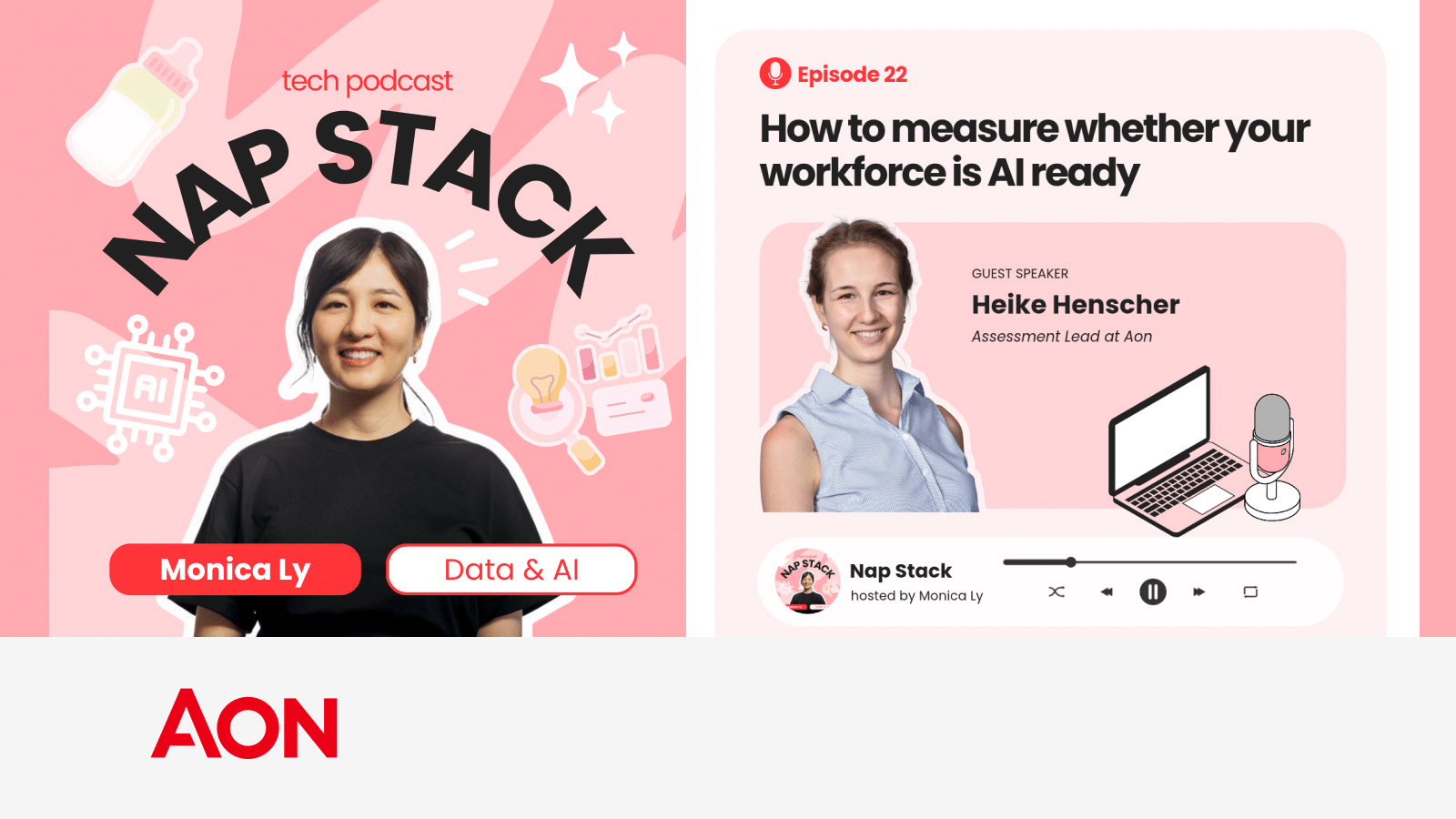
This post draws on Episode 22 of Nap Stack, Monica’s podcast on AI, data, and building a business, with guest Heike Henscher of Aon. Listen on Spotify or Apple Podcasts.
About Nap Stack
Nap Stack is an Australian business podcast hosted by Monica Ly, co-founder of EdgeRed – an Australian data & AI consultancy (part of The Omnia Collective). Each episode is five minutes on AI adoption, data strategy, and the decisions senior leaders are actually making right now. It’s practical, no-hype, and built for executives and business owners – not technologists. New episodes drop weekly.
Find Nap Stack on Spotify and Apple Podcasts.